
Why You Run Out of Breath When You Speak: A Guide for Los Angeles Speakers & Professionals
Do you ever feel like you run out of air when you are talking?Maybe you feel breathless during presentations, meetings, Zoom calls, or even regular conversations.Or you notice that by the end of a sentence, your voice gets weak, strained, or starts to fade out.’If that sounds familiar, you are not alone. And here in my practice in Los Angeles, CA, I see this all the time with speakers, coaches, performers, and professionals who rely on their voice every day.The good news is this is not about your lungs, and it is usually not about needing more air.The Biggest Myth About Breath When Speaking
Most people assume that if they are running out of breath, they simply need to take bigger breaths.But most of the time, that is not the problem.In fact, taking large, forceful breaths can make things worse because it adds more tension, more pressure, and more effort into the system.That is when the voice starts to feel unstable, harder to control, or more strained than it needs to be.What Is Actually Causing You to Run Out of Breath
The real issue is usually not how much air you are taking in. It is how efficiently you are using it.In my work with Los Angeles speakers and professionals, I consistently see the same pattern.People start speaking before the breath is ready.
They rush through sentences without realizing it.
They hold tension in the jaw, neck, shoulders, or chest.
They push their voice to carry instead of allowing it to resonate.Everything might feel fine at the beginning of a sentence, but halfway through, something shifts. Suddenly, it feels like the air is gone.That is when people start gasping, rushing, or forcing their voice to keep going.
And that is when the voice starts to sound breathy, weak, or strained.Why This Happens More in Los Angeles
If you are based in Los Angeles, CA, there are a few environmental and lifestyle factors that can make this show up more quickly.Dry Air Means More Effort
Los Angeles has a naturally dry climate, and when you combine that with constant air conditioning, your vocal folds can dry out faster than you think.
When the voice loses moisture, it requires more effort to produce sound, which can make it feel like you are running out of air sooner.Air Quality and Irritants
Air pollution, allergens, and environmental irritants are also part of living in LA.
These can affect the throat and airways, making the voice feel more sensitive, reactive, or harder to control, especially over the course of a long speaking day.A Culture Where Your Voice Matters
Los Angeles is the center of the entertainment industry, where actors, singers, performers, and creators rely on their voice to do their work. Whether you are on stage, on camera, in the studio, or in the room, you are expected to deliver and be at the top of your game. That level of demand can lead to pushing, overcontrolling, or rushing your voice, which disrupts natural breath flowConstant Environmental Shifts
Moving between warm outdoor air and cool indoor environments throughout the day can throw off your system. Those shifts affect how your breath and voice are regulated, which can make speaking feel less steady and more effortful.What many people do not realize is that these factors add up.It is not just your voice, it is your environment as well.Speaking Should Not Feel Like Effort
One of the most important things to understand is this.Speaking should not feel like effort.You should not feel like you have to push, or hold your breath just to get through a sentence.If it feels like your voice is working harder than it should, or you are constantly trying to keep it going, that is usually a sign that your breath and voice are not aligned yet.And once that coordination improves, speaking starts to feel much more natural, steady, and easy.What Changes When Breath and The Voice Are Aligned
When your breath and voice are coordinated in a more efficient way, everything shifts.👉 Your voice feels steadier.
👉 You stop running out of air mid-sentence.
👉 Your voice carries more easily without extra effort.
👉 You sound calmer, clearer, and more confident.
And most importantly, you stop thinking about your breath altogether.How to Improve Your Breathing When You Speak
The goal is not to take bigger breaths.
The goal is to let your breath support your voice more efficiently.When you allow your pace to slow down, your breath has time to support your voice.
When you give yourself space between thoughts, your vocal mechanism stays more coordinated.
And when you release tension, your voice does not have to work as hard.These small shifts can make a noticeable difference in how your voice feels.Watch This if You Feel Out of Breath When You Speak
If this is something you are experiencing, I explain this in more detail in a short video.Watch here: Why You Sound Out of Breath When You Speak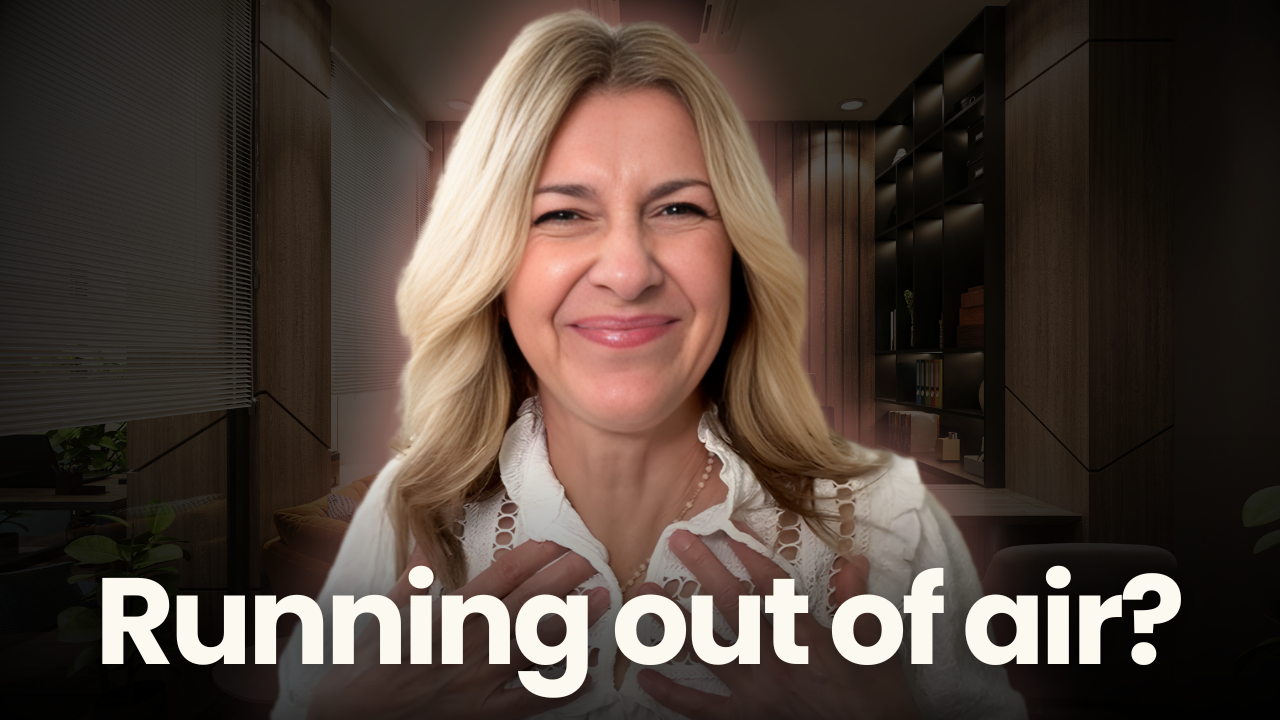
In the video, I walk through what is happening underneath the surface and why your voice may feel like it is running out of air even when you are breathing.
Want a Simple Way to Get Started?
If your voice is still feeling breathless, strained, or harder to use than it should be, the next step is not more effort.It is better coordination.That is exactly what I walk you through in my free Vocal Rescue Guide.It is designed to help you understand why your voice feels off and what you can start doing to bring it back to a place that feels clear, steady, and reliable.Download the Vocal Rescue Guide here.Final Thought
If you are a speaker, coach, or professional in Los Angeles, your voice is part of how you show up in your work and in your life.It is how you communicate, how you connect, and how you lead.And it should not feel like it is working against you.When your voice is supported in the right way, it becomes easier to use, more consistent, and more reliable.Because speaking well is not about taking more air.It is about using your voice in a way that actually works with your body.